Hip Pain & Hip Flexor Tightness Relief
If your hips feel locked up after sitting for hours — or stretching on your own isn't fixing it — the problem is likely deeper than the stretch.
Why Hip Flexors Get Tight — And Why They Stay That Way
Most hip tightness develops gradually. Prolonged sitting keeps your hip flexors in a shortened position for hours at a time. Over weeks and months, the tissue adapts to that shortened state. When you finally stand up and move, those muscles can't fully lengthen the way they're supposed to.
The result: a pulling sensation in the front of your hips, limited stride length, difficulty standing fully upright, and a persistent feeling of being locked through your pelvis and lower back. Common drivers include:
- Prolonged sitting
Desk work, commuting, and sedentary routines keep your hip flexors in a shortened position for hours at a time. Over weeks and months, the tissue adapts to that shortened state — and stops returning to full length when you stand.
- Muscle imbalance: hip flexors vs. glutes
When the hip flexors are chronically dominant, the glutes disengage and weaken. This imbalance puts disproportionate load on the front of the hip and the lower back, reinforcing the restriction cycle.
How tight hips drive back tightness → - Piriformis tension
The piriformis sits deep in the hip. When it's chronically tight, it compresses the sciatic nerve — producing the radiating discomfort many people associate with sciatica.
Hip tightness and sciatic connection → - Prior injury or surgery
The body protects around pain and damage long after healing. Compensation patterns that developed during recovery often remain — creating restriction that wasn't there before the injury.
How Practitioner-Assisted Stretch Therapy May Help
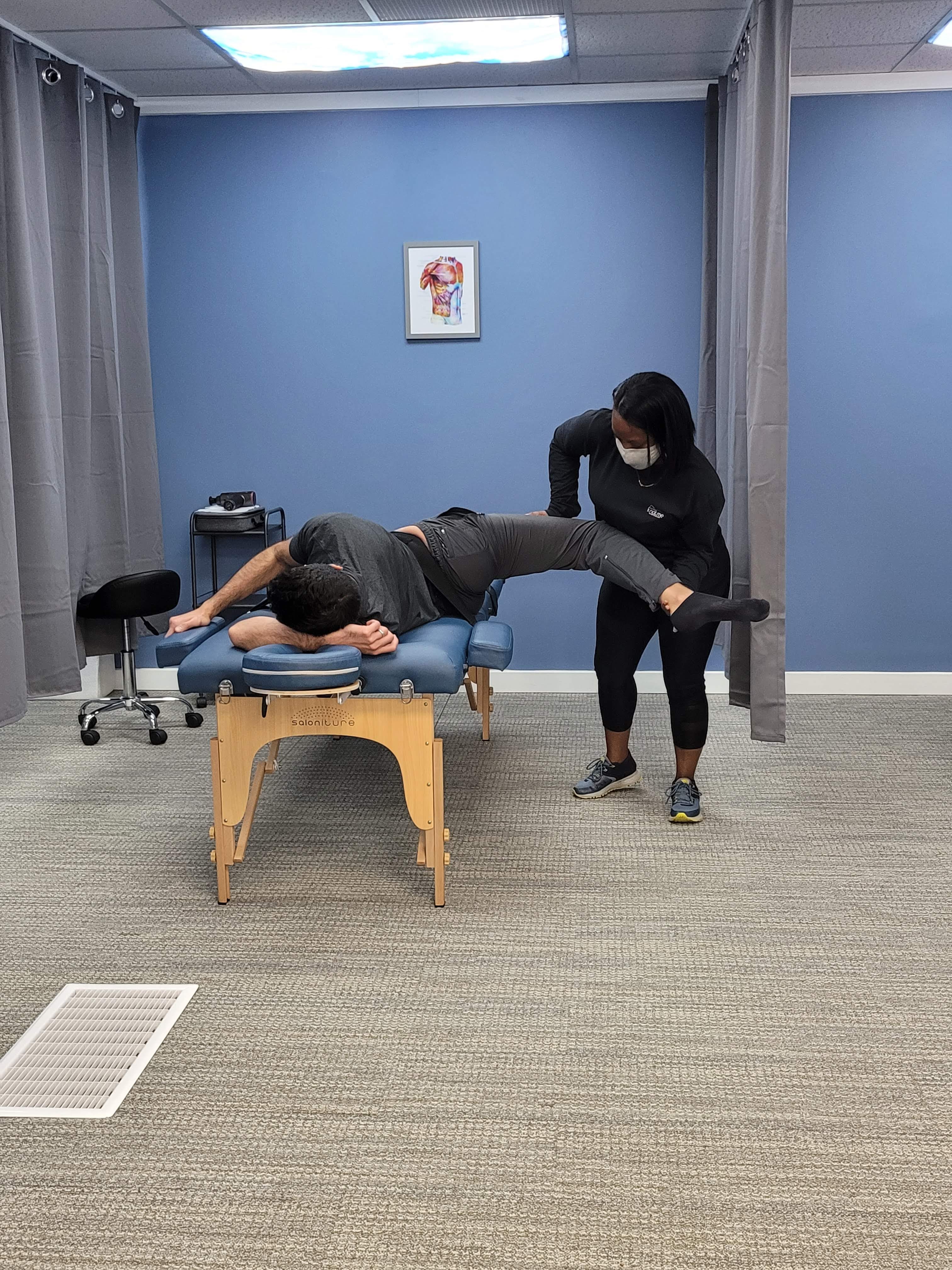
Knot Me's sessions used controlled, guided movement to work through restrictions you can't address through passive or solo stretching. The practitioner applied resistance at precise points in the range of motion — enabling deeper, more targeted work on the hip flexors, piriformis, and surrounding tissue.
A hip-focused session at Knot Me worked on:
- Hip flexor length and pliability (primary driver of anterior hip tightness)
- Piriformis tension
- IT band and lateral hip restriction
- Hip joint mobility and rotation range
Clients often report reduced tightness and improved ease of movement within the first few sessions. Individual results vary.
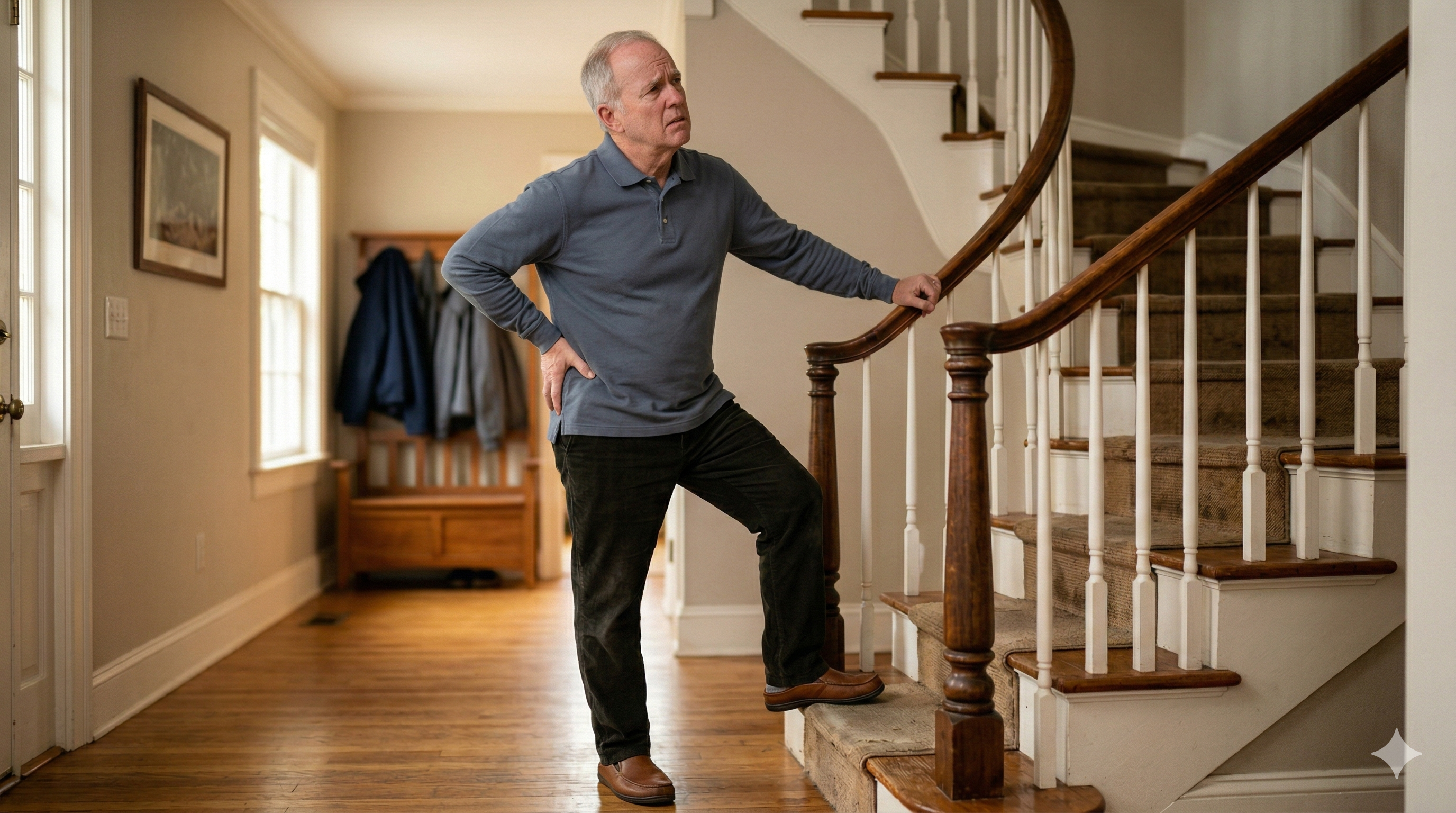
Sound Familiar?
These are the moments our clients described most.


Frequently Asked Questions
Can tight hips cause sciatica?
Yes — the piriformis muscle, which sits deep in the hip, can compress the sciatic nerve when chronically tight.
Practitioner-assisted stretch therapy is not a medical treatment. Sessions are designed to support mobility and reduce tension. Results vary. If you are experiencing severe pain or a diagnosed medical condition, please consult a qualified healthcare provider.