Mobility & Flexibility Improvement
in Southfield, MI
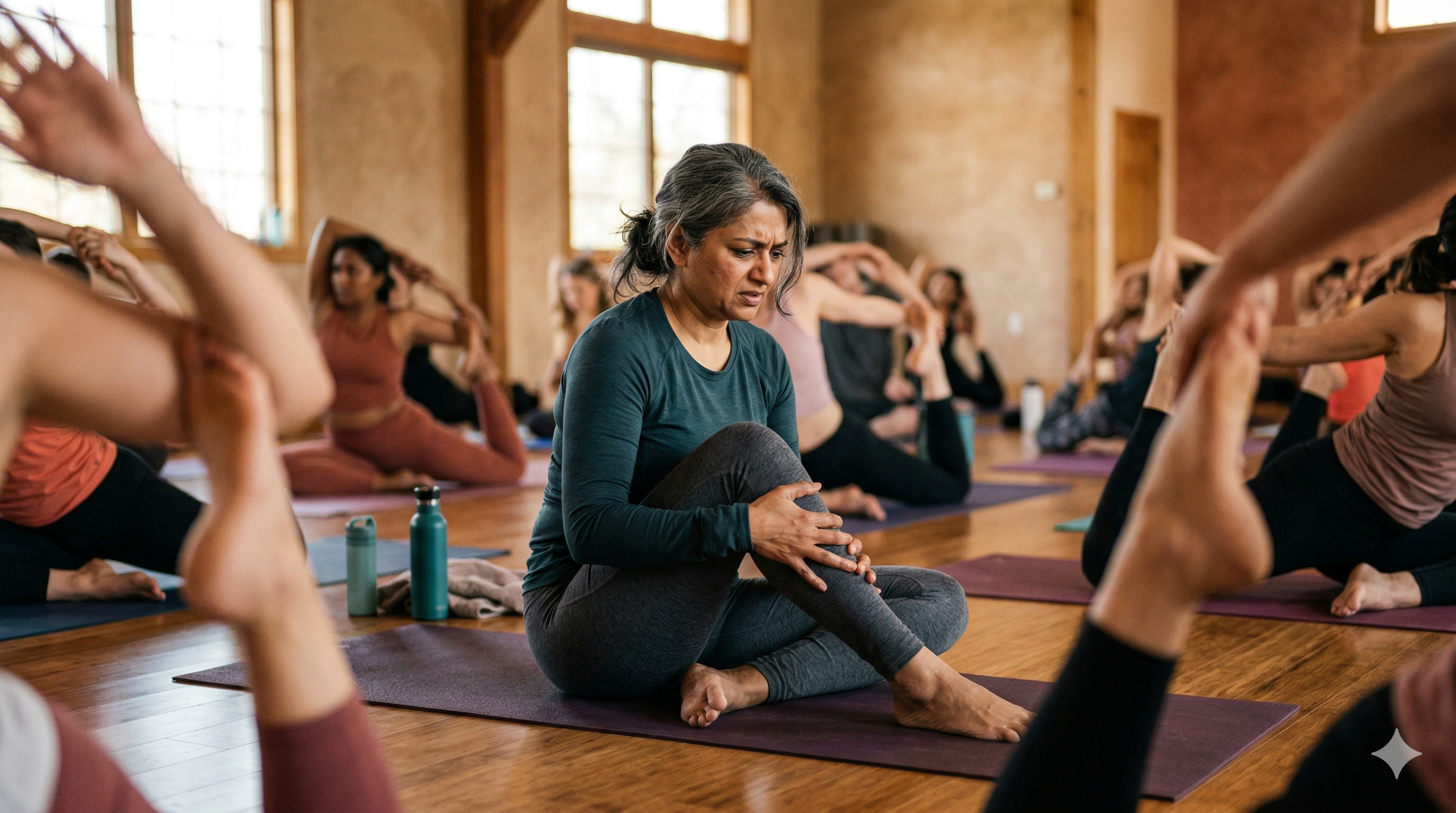
If bending, rotating, or getting up off the floor has gotten harder over time — that's not just aging. That's restricted movement, and it's addressable.
Why the Difference Matters
Flexibility is the passive ability of a muscle to lengthen. You can be "flexible" in the sense that a muscle can be stretched by an external force, but still have poor mobility. Mobility is the active ability to move a joint through its full range of motion with control — it's what allows you to squat, reach, rotate, and move the way you're supposed to.
Most people who come to Knot Me don't just have tight muscles — they have restricted mobility patterns. Their joints aren't moving through their full range because the soft tissue surrounding them has adapted to chronic positions. Who benefits from structured mobility work:
- Desk workers and professionals
If you sit for 6–10 hours a day, your hip flexors, thoracic spine, and hamstrings are in shortened, compressed positions for most of your waking hours. Over time this becomes your baseline. Structured mobility work can help reverse that pattern.
- Active adults and weekend warriors
If you're active but have noticed your range of motion slowly narrowing — your squat is shallower, your shoulder rotation is tighter, your stride is shorter — restriction is likely ahead of injury. Addressing it proactively is the better play.
- People post-injury or post-surgery
Injury and surgery often create compensation patterns — the body protects around damage and stays in protective positions long after healing. Guided stretch therapy can help restore range of motion that was lost or limited during recovery.
Hip pain and hip flexor tightness → - Anyone who self-stretches without results
If you stretch regularly but don't feel like you're making progress, it's often because you're working against your body's natural resistance without enough depth or specificity. A practitioner can work at depths and angles you can't reach on your own.
Structured, Progressive Mobility Work
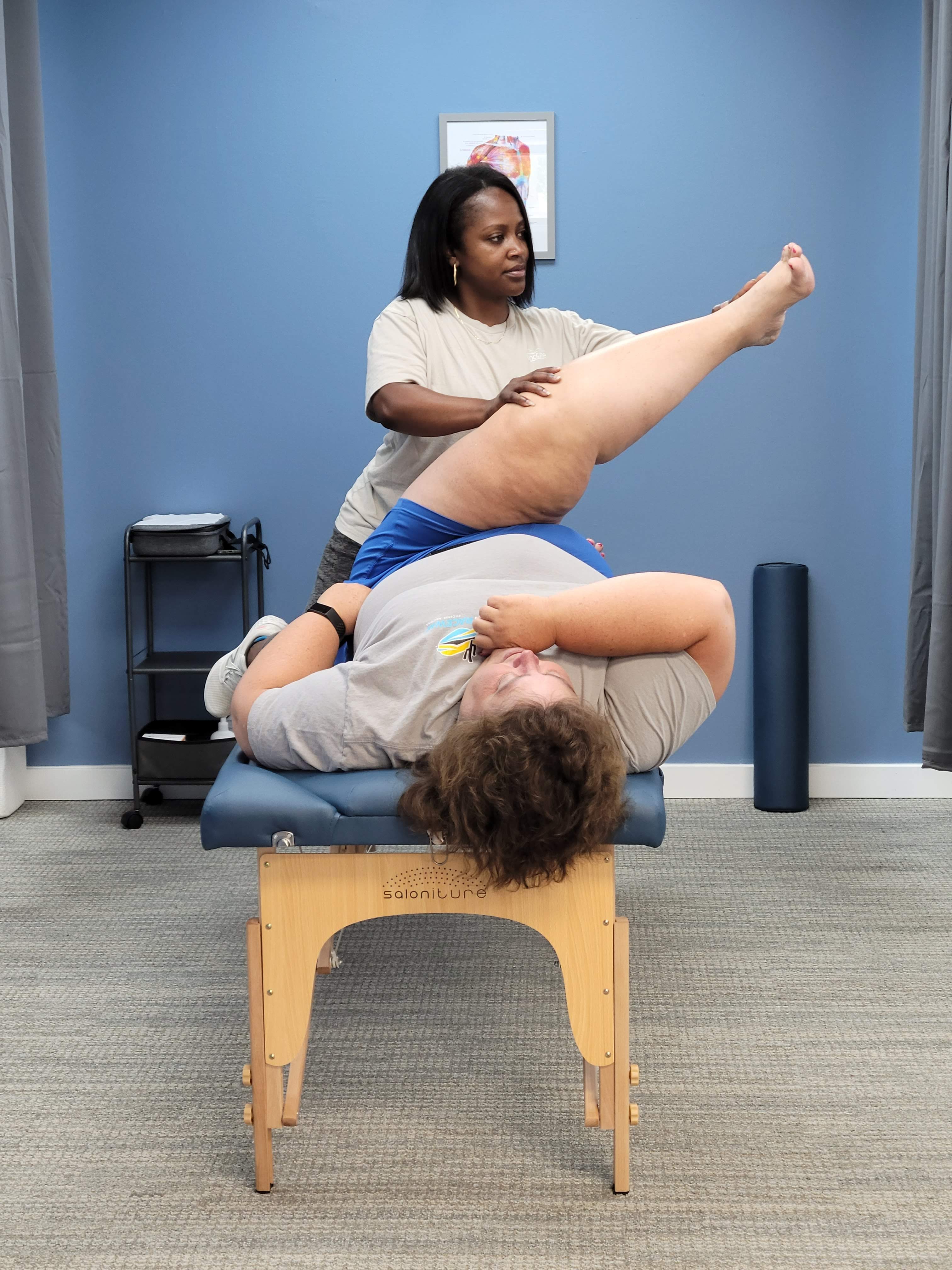
Each session starts with a brief assessment of your current range of motion and areas of restriction. From there, your practitioner builds the session around what needs attention — typically a combination of hip work, lower back and posterior chain release, and wherever your specific restrictions sit.
Sessions are guided and progressive. You engage with the movement, but you're not working alone. A mobility-focused session at Knot Me may address:
- Hip mobility — the most common limitation in overall range of motion
- Thoracic spine mobility and rotation
- Posterior chain: hamstrings, glutes, and lower back
- Shoulder joint range of motion and pectoral restriction
- Full-body range of motion assessment to identify primary restrictions
Mobility Isn't Just for Athletes
Whether you want to move better, stay ahead of restriction, or get back to the range of motion you used to have — we can help.

Who This Is For
Mobility work is useful across a wide range of clients — not just those in pain. If your range of motion has been slowly narrowing, or you've been told you're "just tight," there's likely addressable restriction involved.
- People who've noticed their movement range narrowing over months or years
- Anyone told they have 'tight' hips, hamstrings, or shoulders
- Clients who want to stay active as they age without restriction holding them back
- People who self-stretch consistently but can't make progress on their own
- Athletes and active adults looking to preserve and extend their range of motion
Sound Familiar?
These are the moments our clients describe most.


Results From People Like You
"A competitive dancer in her late 20s was told her posture was holding her back before an upcoming competition. After sessions at Knot Me, she was able to stand fully upright with proper alignment — and placed second in the competition."
— Client, late 20s · Posture / competition prep
"He had stopped running for a full year — calf pain made it impossible. After sessions at Knot Me, he's running again without pain. His words: "like I'm in my youth.""
— Client, late 50s · Stopped running one year
"He came in with limited range of motion. After his sessions, he was playing the best golf of his life — and other players started asking what he was doing differently."
— Client, mid-70s · Range of motion / golf performance
"He practices martial arts and hadn't been able to get into a specific pose for years. He performed it immediately after his first session."
— Client, early 50s · Martial arts / flexibility
Frequently Asked Questions
I'm not flexible at all. Is that a problem?
Not at all — that's usually why people come to us. There's no baseline flexibility requirement. Every session is built around your current range of motion. Many of our clients start with significant restriction and see meaningful improvement over time.
How quickly will I notice a difference in my mobility?
Most clients notice some improvement in ease of movement after one session. Lasting, structural changes to mobility patterns typically require consistent sessions over several weeks. How quickly you progress depends on how long the restriction has been present and how frequently you come in.
Is this only for people with pain?
No. Many clients come in without significant pain — they simply want to move better, stay ahead of restriction, or maintain the mobility they've worked to build. Stretch therapy is as useful for prevention and maintenance as it is for addressing existing limitations.
You don't have to accept stiffness and restriction as permanent.
Start with a Jump Start session — 50 minutes where we assess what's restricted and show you what structured stretch therapy can do.
New clients only · First visit — $65
Located inside Franklin Athletic Club
29350 Northwestern Hwy, Southfield, MI
(248) 325-9480
Practitioner-assisted stretch therapy is not a medical treatment. Sessions are designed to support range of motion and reduce soft tissue restriction. Results vary.