Real Reflexology.
Not a Hand or Foot Rub.
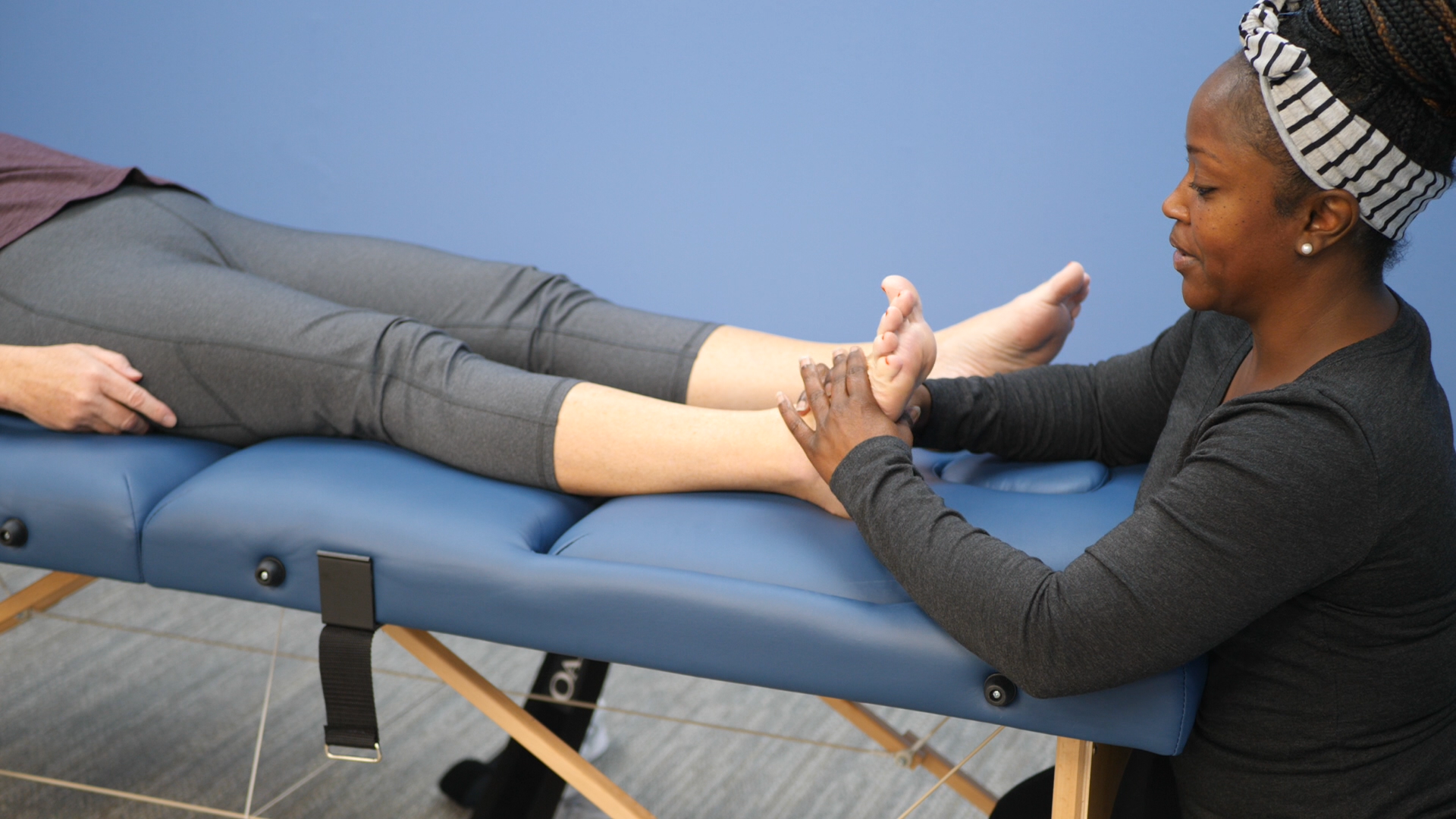
Reflexology maps the body's organ systems, glands, and nerve pathways through precise points in the feet and hands. At Knot Me, it's administered by a practitioner with 20+ years of training in anatomy, kinesiology, and reflexology — and it's nothing like what most people expect.
Your Feet Are a Map of Your Entire Body
Reflexology is based on the principle that specific points on the feet and hands — called reflex zones — correspond to organs, glands, and systems throughout the body. Applying precise pressure to these zones produces responses in the corresponding areas: reduced tension, improved circulation, nervous system regulation, and organ function support.
This is not relaxation work done to the feet. It is systematic, informed work done through the feet and hands — with outcomes in completely different parts of the body.
A foot massage loosens the muscles of the foot. Reflexology at Knot Me can relieve a migraine, reduce arthritic joint inflammation, improve digestion, and help a client who hasn't slept well in months finally rest. The mechanism is different. The outcomes are different. The training required to deliver it well is different.
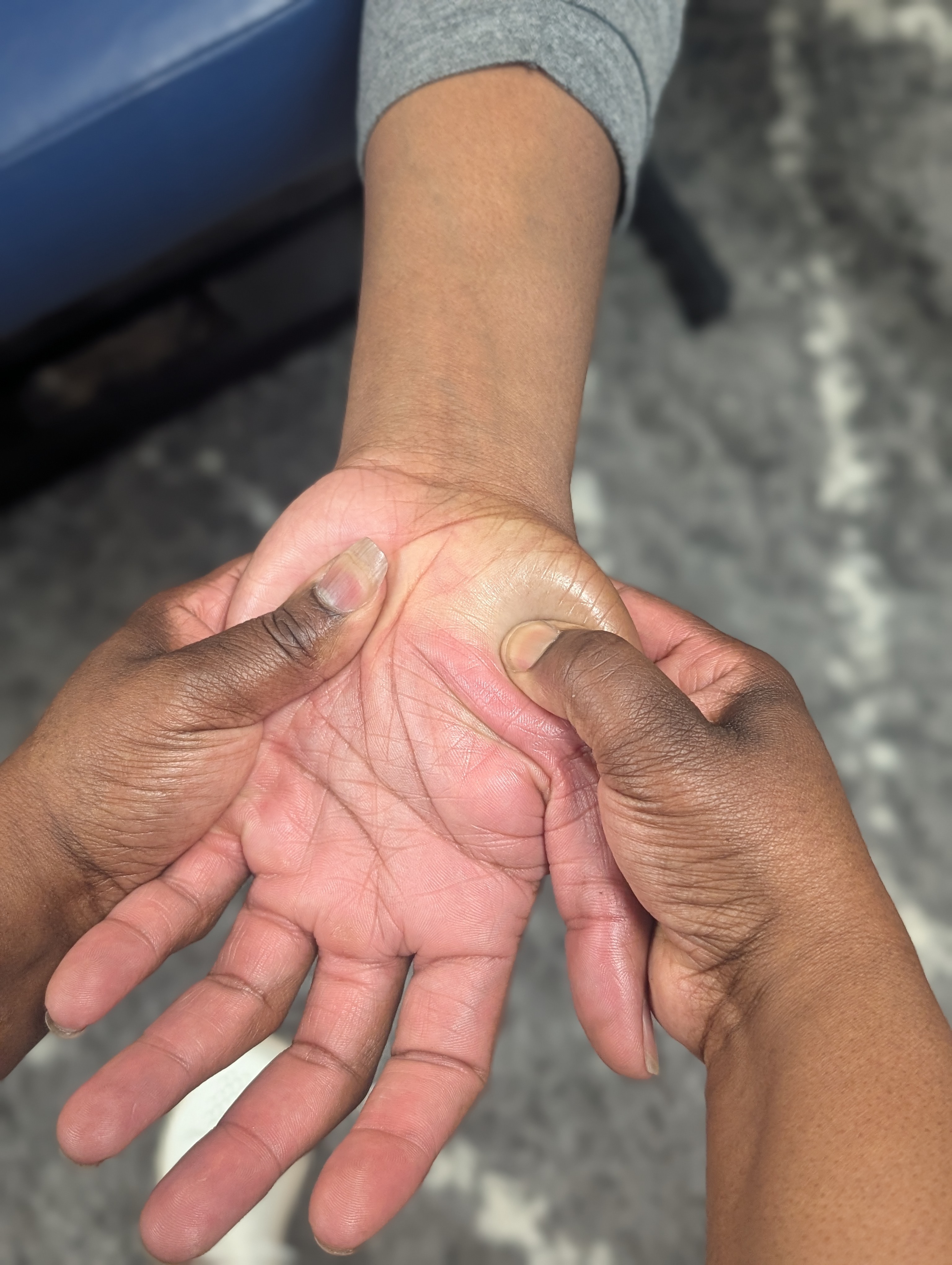

Reflexology is administered to both the hands and feet — the reflex zones map the same systems through either.
"Reflexology isn't something I added to my practice. It's built into everything — anatomy, kinesiology, and reflexology are the same conversation. You can't separate them."
— Sharissa, Founder & Stretchologist, Knot Me
20+ Years. Formal Training. Real Outcomes.
Knot Me's lead practitioner studied anatomy and kinesiology at Wayne State University alongside a formal reflexology certification — not as separate disciplines, but as an integrated understanding of how the body functions. That foundation is what makes the reflexology at Knot Me different from what you'd receive at a generic wellness spa.
When a client comes in describing constipation, migraines, or arthritic joint pain, the work isn't coming from a wall chart — it's coming from 20+ years of understanding how these systems respond, how to read the reflex points, how to sequence the work, and how to adjust based on what the body communicates during the session.
Physicians send their own patients here. That's the most credible signal we have for what this level of practice actually delivers.
More about Knot Me →Conditions That Respond to Reflexology
Reflexology is not position-specific — it works throughout the body through the reflex map. These are the conditions our clients most commonly seek it for.
- Arthritis & Joint Pain
Reflexology targets the reflex points corresponding to inflamed joints — reducing localized tension in the surrounding tissue, improving circulation to those areas, and helping the body work through stiffness that doesn't respond to stretching alone. Many clients with arthritis in the feet, knees, and hips report measurable reduction in daily discomfort with consistent sessions.
Hip pain and joint mobility → - Constipation & Digestive Health
The digestive reflex zones on the feet correspond to the large intestine, colon, and associated organs. Systematic work through these zones stimulates peristalsis — the movement your digestive system needs to function properly. Many clients dealing with chronic constipation or sluggish digestion find that regular reflexology sessions produce consistent relief where other approaches have fallen short.
- Migraines & Chronic Headaches
The temporal lobes are accessible through the feet. Reflexology targeting the cranial and cervical reflex zones releases tension that drives tension headaches and migraines — without medication. Some clients arrive mid-migraine. The relief, for those who respond, is often immediate.
Migraine and headache relief → - Sleep & the Nervous System
The entire nervous system connects through the hands and feet. Reflexology has a calming effect on the autonomic nervous system — shifting the body from sympathetic (fight-or-flight) to parasympathetic (rest-and-repair) dominance. Clients dealing with poor sleep, chronic stress, or anxiety commonly report significantly improved rest following sessions that include the reflexology portion.
- Restless Leg Syndrome (RLS)
RLS symptoms — the involuntary urge to move, the nighttime discomfort — are often connected to poor circulation and nervous system dysregulation in the lower limbs. Reflexology targeting the leg and nerve reflex zones can interrupt this cycle, reducing symptom intensity and improving sleep quality for many clients.
Curious what reflexology can address for you?
Start with a $65 Jump Start — your practitioner will assess your restrictions and show you what integrated stretch therapy and reflexology can do in a single session.
Your First Reflexology Session at Knot Me
Every session begins with an assessment — understanding what you're dealing with, what you've tried, and what your goals are. Reflexology is then integrated based on your specific needs: some clients want it woven throughout the full session, others prefer a dedicated Hands & Feet Reflexology session.
You stay fully clothed
Only your shoes and socks come off. Everything else stays on.
Your preference drives the session
Prefer more stretching? More reflexology? More hand work? Your practitioner builds around what you need.
Discomfort is normal — pain is not
Areas of tension will feel tender. That's the reflex point communicating. Your practitioner always stays within your tolerance.
The effect builds over time
One session produces real results. A consistent series produces structural change — in sleep quality, digestive regularity, pain levels, and mobility.
Sessions That Include Reflexology
Stretching, Acupressure & Reflexology
80 min · Full integration — stretching, acupressure, and reflexology
Hands & Feet Reflexology
50 min · Dedicated reflexology session — feet and hands
Jump Start
50 min · New clients only — assessment + intro session
Results From People Like You
“She arrived mid-migraine — lights low, pain spiking. Sharissa worked the cranial reflex zones in her feet. By the end of the session, the migraine was completely gone. She left in tears — not from pain, but because she hadn't had relief like that in years.”
— Client, early 40s · Chronic migraine
“A client dealing with severe constipation and digestive discomfort that hadn't responded to dietary changes or medication. After consistent reflexology sessions targeting her digestive zones, she had her first reliable regularity in over a year.”
— Client, mid-50s · Chronic constipation
“Her arthritis had made the morning ritual of getting out of bed and moving through the first hour of the day genuinely painful. After reflexology sessions targeting her joint zones, the morning stiffness decreased significantly — not gone, but manageable in a way it hadn't been.”
— Client, late 60s · Arthritis / joint pain
Frequently Asked Questions
What's the difference between reflexology and a foot massage?
A foot massage works the surface muscles of the foot for relaxation. Reflexology works a mapped system of reflex points that correspond to specific organs, glands, and body systems. Pressure on a reflex point in the foot can produce a response in a completely different part of the body. They are not the same thing.
Does reflexology actually work, or is it pseudoscience?
The mechanisms behind reflexology are not fully understood by Western science, but the clinical outcomes — reduced migraine frequency, improved digestion, better sleep, decreased pain in arthritic joints — are documented by many practitioners and reported consistently by clients. We let the results speak for themselves.
Can reflexology help with arthritis?
Yes. Reflexology targets the reflex points corresponding to inflamed joints and promotes circulation to those areas. Clients with arthritis in the feet, knees, and hips commonly report reduced daily discomfort with consistent sessions. It is not a cure — but for many clients, it changes what their day feels like.
Can reflexology help with constipation?
Yes — this is one of the most consistent outcomes we see. The colon and digestive reflex zones on the feet respond well to targeted work. Many clients dealing with chronic constipation find that regular reflexology produces relief that medications and dietary changes haven't fully addressed.
How is reflexology different from acupressure?
Acupressure works along the body's meridian lines — applying pressure at specific points along energy pathways that run throughout the entire body. Reflexology works through a mapped system specific to the feet and hands, where each zone corresponds to a body system or organ. Both are part of what we offer. In many sessions, they work together.
Can I book a session focused only on reflexology?
Yes. Our Hands & Feet Reflexology session is 50 minutes focused exclusively on reflexology through the hands and feet. If you'd prefer a combined session that includes stretching and acupressure, our full sessions integrate all three.
View services & pricing →Can reflexology hurt?
Tender reflex points are common — especially in areas of tension or restriction. That discomfort is temporary and typically decreases with consistent sessions as the underlying tension releases. You are always in control. Your practitioner never takes you past your comfort level.
Ready to experience what real reflexology delivers?
Start with a Jump Start — a full 50-minute session where your practitioner assesses your specific situation and shows you what targeted reflexology can address.
New clients only · First visit — $65
Located inside Franklin Athletic Club
29350 Northwestern Hwy, Southfield, MI
(248) 325-9480
Reflexology is not a medical treatment and is not intended to diagnose, treat, or cure any condition. Sessions are designed to support the body's natural function and promote overall wellness. Results vary. If you have a diagnosed medical condition, consult your physician before booking.