Sciatica Relief Through Stretch Therapy
Sciatica is a symptom — not a diagnosis. In many cases the culprit is chronic tightness in the muscles surrounding the nerve.
What's Actually Causing Your Sciatic Discomfort
Sciatica isn't one thing — it's a symptom. That sharp, burning, or radiating pain that runs from your lower back through your hip and down your leg is your sciatic nerve telling you something nearby is compressing it. In many cases, the culprit isn't a disc or a structural problem — it's chronic tightness in the muscles surrounding the nerve.
Common soft tissue contributors to sciatic discomfort:
- Tight piriformis or deep hip rotators
The sciatic nerve runs through or alongside the piriformis — a deep hip muscle. When the piriformis is chronically tight, it can press against the nerve, producing the radiating pain, burning, or numbness that runs down the leg.
Hip tightness and the sciatic connection → - Hip flexor restriction pulling the pelvis forward
When the hip flexors are shortened, they tilt the pelvis anteriorly and compress the structures around the lumbar spine — including the openings through which the sciatic nerve exits.
- Lower back tightness and lumbar tension
Chronic tightness in the lower back alters spinal alignment and increases load on the nerve roots of the sciatic system.
Back pain and lower back tightness → - Prolonged sitting and sedentary posture
Sitting compresses the piriformis directly and keeps the hip flexors in a shortened state for hours at a time — creating the exact conditions that produce sciatic tension.
How Stretch Therapy May Help Relieve Sciatic Tension
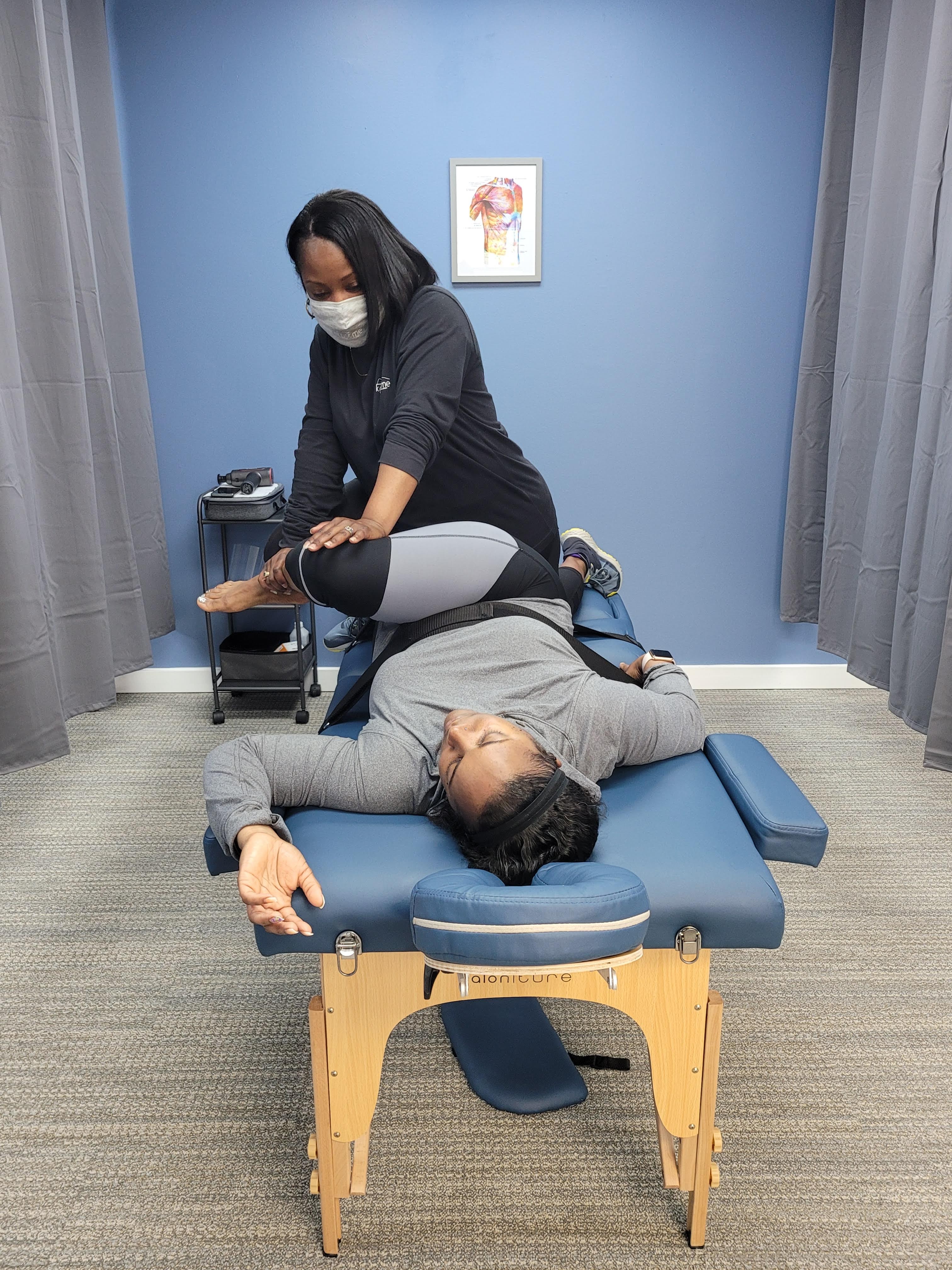
Practitioner-assisted stretch therapy works on soft tissue restrictions. This is not massage and not physical therapy — it's targeted, guided movement work focused on the hip and lower back.
A sciatica-focused stretch therapy session may address:
- Piriformis tension
- Hip flexor length and pelvic positioning
- Lower back tightness and lumbar mobility
- Deep hip rotator restriction
- Overall hip joint range of motion
Sound Familiar?
These are the moments clients described most.



Frequently Asked Questions
Is stretch therapy a replacement for medical treatment for sciatica?
No. Practitioner-assisted stretch therapy is not a medical treatment and is not a substitute for physician care. It is designed to address soft tissue restriction that may be contributing to sciatic discomfort. If you have a diagnosed disc condition, nerve impingement, or severe symptoms, consult your healthcare provider first.
How is this different from what a chiropractor or physical therapist does for sciatica?
Chiropractors and physical therapists work on the structural and neurological components of sciatica. Stretch therapy focuses on the soft tissue — specifically the tight muscles and restricted movement patterns in the hip and lower back that can contribute to sciatic compression. Many clients use both; they serve different purposes.
Practitioner-assisted stretch therapy is not a medical treatment. Sessions are designed to address soft tissue restriction and support mobility. Not appropriate as a substitute for physician care in cases of diagnosed disc herniation, nerve damage, or severe sciatica. Results vary.